

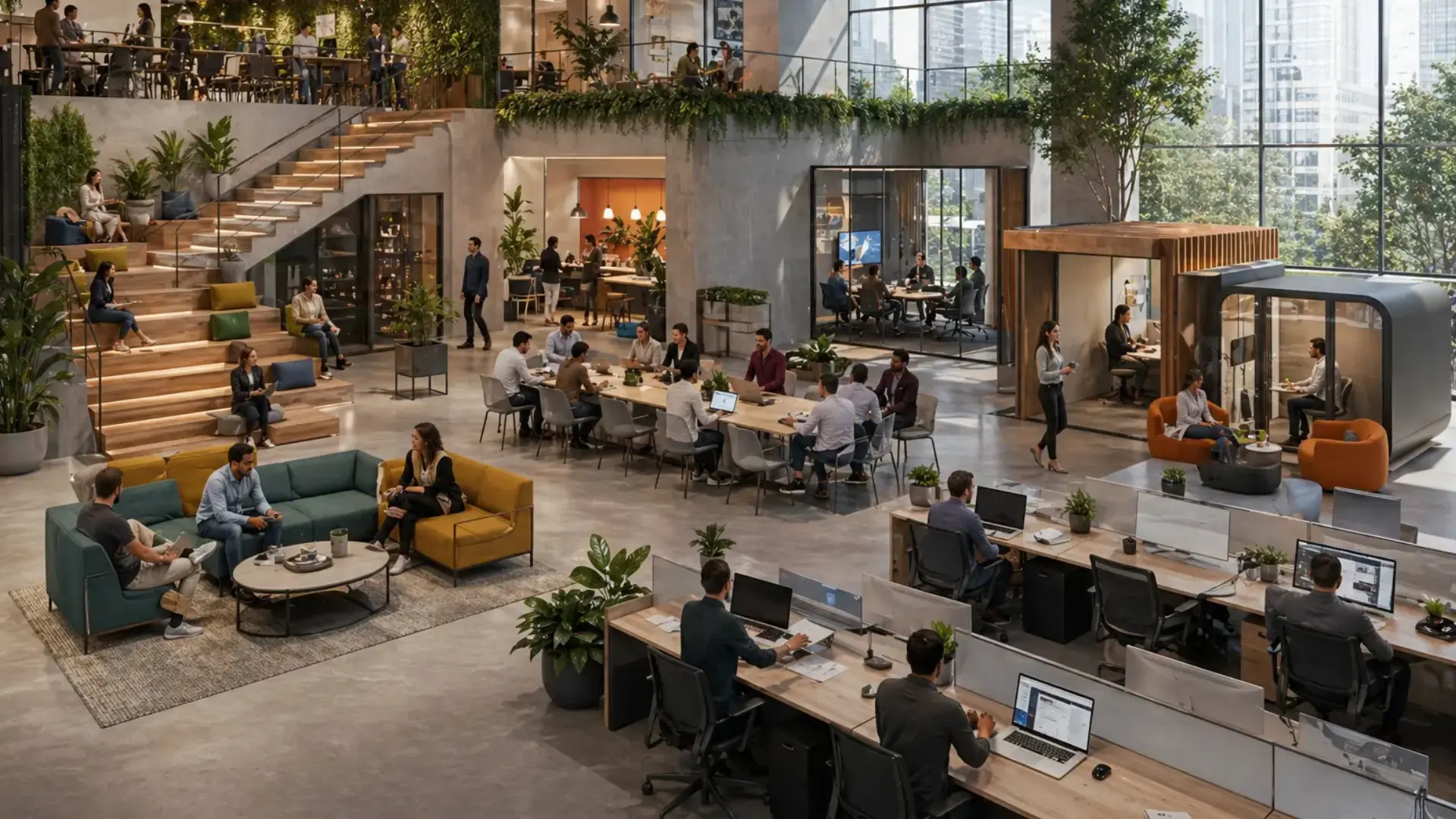
In today’s knowledge-driven economy, talent is one of the most valuable assets a company can have. Attracting and retaining skilled professionals is not just about compensation—it is also about creating a workplace that inspires, supports productivity, and reflects the company’s culture.
The modern office has evolved from being a place where people simply work to a strategic
environment that influences employee satisfaction, collaboration, and innovation. Thoughtful
interior design play a critical role in shaping this experience.
The Office as a Reflection of Company Culture
A well-designed office communicates the identity and values of an organization. From the moment employees or visitors enter the space, the interiors should reflect the company’s ethos. The spatial
layout, materials, lighting, and branding integration help create an environment that feels authentic and aligned with the organization’s culture. Offices that embody a strong identity tend to create a
sense of pride and belonging among employees.
Balancing Focus and Collaboration
Office interiors should incorporate multiple spatial environments such as open work areas for team
interaction, quiet zones for focused tasks, meeting rooms for structured discussions, and informal breakout spaces for spontaneous
collaboration. By offering these varied settings within the workplace, the interiors will enable different work styles to coexist seamlessly, ultimately enhancing productivity and overall workplace efficiency.
Creating Spaces That Encourage Innovation
Innovation rarely happens only at desks or in meeting rooms. Many breakthrough ideas emerge from informal conversations and spontaneous interactions. Interiors can encourage such
interactions through carefully designed communal spaces such as cafés, lounges, collaboration hubs,
and social staircases. These areas create opportunities for people from different teams to connect and exchange ideas, strengthening the company’s creative culture.
Employee Wellbeing as a Design Priority
Offices that prioritize natural light, ventilation, and spatial comfort contribute significantly to the
physical and mental wellbeing of employees. Interior design can enhance wellbeing through
comfortable furniture, balanced acoustics, and thoughtful lighting and ventilation strategies
Flexibility for the Future of Work
Flexible architecture and modular interior planning allow spaces to evolve over time. Movable partitions, adaptable furniture systems, and multipurpose rooms make it possible to reconfigure
spaces without major structural changes. This flexibility ensures that the workplace remains relevant
as organizational needs grow and change.
Companies competing for top talent increasingly recognize that workplace design is not merely an aesthetic exercise—it is a strategic business investment. A well-designed office can strengthen company culture, enhance employee satisfaction, and improve collaboration across teams.
Companies competing for top talent increasingly recognize that workplace design is not merely an aesthetic exercise—it is a strategic business investment. A well-designed office can strengthen company culture, enhance employee satisfaction, and improve collaboration across teams.